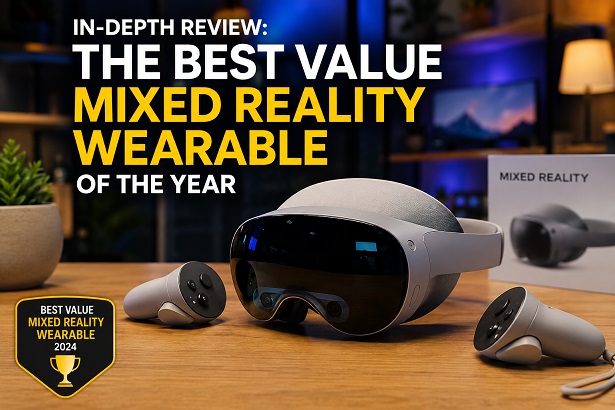
The mixed reality (MR) market has exploded with high-end devices crossing the $3,000 mark. While tech enthusiasts marvel at enterprise-grade hardware, the real battleground for everyday consumers is the value-for-money segment. Buyers want spatial computing, crisp hand tracking, and immersive pass-through without breaking the bank.
In this review, we break down the leading device that balances cutting-edge features with an affordable price tag, helping you decide if it deserves a spot in your hardware setup.
Specifications Overview
| Feature | Value Leader Standard | Premium Competitor Benchmark |
|---|---|---|
| Display Resolution | 2K per eye (LCD/Micro-OLED hybrid) | 4K per eye (Micro-OLED) |
| Pass-Through Quality | High-definition color (Low latency) | Ultra-HD photorealistic |
| Tracking Systems | Inside-out inside camera array + Hand tracking | Advanced Eye-Tracking + Gesture matrix |
| Price Segment | $500 – $750 | $3,500+ |
Why This Device is the Uncontested Value King
1. Next-Gen Color Pass-Through
The most critical feature of a mixed reality wearable is its ability to blend digital objects into your real physical room. This device features dual, high-resolution front cameras that project a color-accurate, low-latency view of your surroundings. You can read your physical smartphone screen or pick up a coffee cup comfortably while virtual browser windows float right next to you.
2. Advanced Standalone Processing
You do not need an expensive gaming PC or a tangle of wires to run this headset. It operates on a completely standalone mobile chipset optimized for spatial environments. This architecture gives you the absolute freedom to move around your living room, watch movies on a giant virtual screen in bed, or handle productivity tasks on the go.
3. Ergonimics and Long-Term Comfort
Premium headsets often suffer from being front-heavy, causing neck strain after an hour of use. The current value champion features an upgraded counterweighted strap design that shifts the battery pack to the back of the head. This distributes the weight evenly, making long movie sessions or extended gaming hours incredibly comfortable.
Where the Compromises Are
To achieve a consumer-friendly price point, manufacturers have to make strategic hardware trade-offs. This headset lacks premium eye-tracking cameras, meaning you navigate menus using precise hand gestures or physical controllers instead of just looking at icons. Additionally, the integrated speakers are clear but lack deep bass, making high-end headphones a recommended upgrade for audiophiles.
Final Verdict: Is It Worth It?
If you want to experience the future of spatial computing, multi-screen multitasking, and immersive entertainment today without draining your savings, this value-tier mixed reality wearable is an absolute home run. It delivers 85% of the features found in ultra-premium headsets at a mere fraction of the cost.