What If You Had a Digital Version of Yourself?
Imagine having a virtual copy of your body that constantly updates itself using real-time data from your wearable devices.
This isn’t science fiction anymore.
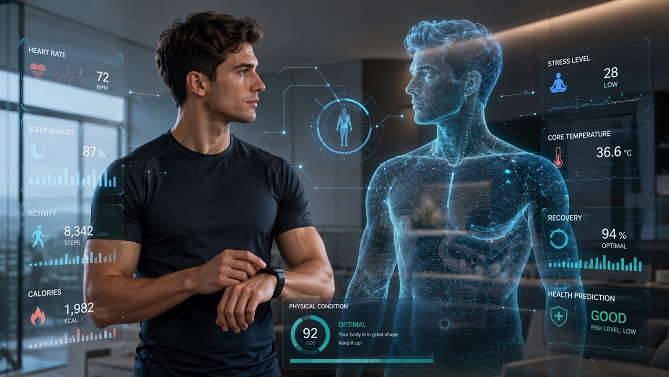
Technology companies and healthcare researchers are working on a concept known as a Digital Twin — a highly detailed virtual model of a person that mirrors their physical condition, habits, and health metrics in real time.
Many experts believe digital twins could become one of the most disruptive technologies of the next decade.
What Is a Human Digital Twin?
A digital twin is a virtual representation of a real-world object.
Originally developed for aircraft engines and industrial equipment, the concept is now being applied to humans through wearable technology.
Using data collected from:
- Smartwatches
- Smart rings
- AR glasses
- Smart clothing
- Fitness trackers
- Medical sensors
AI systems can build a continuously updated model of your body.
This model can simulate how your body may react to specific lifestyle choices, treatments, or environmental factors.
How Wearables Make Digital Twins Possible
The rise of advanced wearables is generating an unprecedented amount of personal data.
Every day, wearable devices can track:
- Heart rate
- Sleep quality
- Blood oxygen
- Physical activity
- Stress levels
- Body temperature
- Recovery status
Artificial intelligence processes these data streams and feeds them into your digital twin.
The more data collected, the more accurate the virtual model becomes.
Predicting Health Problems Before They Happen
One of the most exciting applications of digital twins is predictive healthcare.
Instead of reacting to illness, future healthcare systems may be able to anticipate problems before symptoms appear.
Potential applications include:
Cardiovascular Disease Prediction
AI could identify subtle changes that indicate future heart problems months or years in advance.
Diabetes Risk Assessment
Digital twins may simulate how diet and exercise choices affect long-term metabolic health.
Personalized Cancer Screening
Future models could identify individual risk factors and recommend earlier testing.
Mental Health Monitoring
Behavioral and physiological patterns could reveal signs of burnout, chronic stress, or depression.
A Personal AI Health Coach
Digital twins may eventually become highly personalized health advisors.
Rather than generic recommendations, users could receive advice specifically tailored to their unique physiology.
Examples include:
- Optimal workout routines
- Personalized nutrition plans
- Recovery recommendations
- Sleep improvement strategies
- Medication effectiveness predictions
Every recommendation would be based on your own biological data rather than population averages.
Beyond Healthcare: The Metaverse Connection
Digital twins are also expected to play a major role in future virtual environments.
Your avatar in the metaverse could become a real-time reflection of your physical condition and biometric data.
Future possibilities include:
- Realistic virtual identities
- Personalized fitness experiences
- Health-aware virtual worlds
- Enhanced remote collaboration
- Advanced gaming interactions
The boundary between physical and digital existence may become increasingly blurred.
Privacy Challenges
With enormous potential comes significant responsibility.
Digital twins require access to highly sensitive personal information.
Questions surrounding:
- Data ownership
- Cybersecurity
- AI transparency
- Consent management
will become critical as adoption increases.
Building public trust may be just as important as developing the technology itself.
Conclusion
Digital twins could become the ultimate evolution of wearable technology. By combining artificial intelligence, biometric sensors, and real-time health monitoring, these virtual replicas may help people live longer, healthier, and more personalized lives.
The future of wearables may not simply be about tracking data—it may be about creating a living digital version of ourselves capable of predicting what comes next.